Your processes. Your data. Your AI.
Search less. Type less. Work faster.
Locallution analyses your business processes and integrates local AI exactly where time is being lost today. We develop bespoke AI infrastructures for documents, knowledge and automation — directly in your own environment and with a traceable security architecture.
Local data processing, defined access rights, controlled interfaces, documented security measures and ongoing maintenance create a technical foundation for organisations with high requirements for data protection and cybersecurity.
- GDPR
- EU AI Act
- NIS2-oriented security architecture
- Local processing
- Roles & rights
- Security updates
- Backup & recovery
- Documented architecture
- Controlled external access

The same rule applies to this website — it loads nothing from anyone else’s servers. You can verify that in your browser’s network tab.
Image 1 of 2
What we do
We don’t just install AI. We optimise how your business runs.
Analyse processes
We examine where staff lose time unnecessarily today — for example in document searches, email, gathering information, filing or recurring tasks.
Build the AI infrastructure
We connect local language models to your documents, internal information, existing systems and user permissions.
Speed up everyday work
Recurring tasks are prepared, automated or noticeably shortened. Staff keep control of the decisions that matter.
What it looks like
Ask your own company.
Retrieve company knowledge, internal processes and documents through a single chat interface. New employees find answers faster, established teams spend less time searching – and all processing stays on your own infrastructure.
Free, no-obligation process analysis
Where we start
We start where time is being lost today.
Four everyday situations as they occur in many businesses — examples, not measurements. Next to each: what the same task looks like with local AI.
Today
An employee spends 15 minutes searching through documents.
With Locallution
The AI finds the relevant passages in seconds and shows the sources.
Today
Emails are read, categorised and answered by hand.
With Locallution
The AI recognises the request and prepares a draft reply.
Today
Internal knowledge sits scattered across folders, PDFs and documents.
With Locallution
Company knowledge becomes centrally and naturally searchable.
Today
Recurring routines are handled manually every single day.
With Locallution
Automated workflows take over the preparatory steps.
Security architecture
Not just local. Controllable.
Local processing reduces external dependencies. What makes an AI system secure, however, is the architecture behind it.
That is why, when introducing a system, we look not only at the AI model but also at access rights, network boundaries, backups, updates, logging, recovery and external interfaces.
For organisations that fall under NIS2 or the respective national transposition of the directive, these requirements can be taken into account from the outset — in planning, integration and documentation of the AI infrastructure.
Control access
Keep user and administrator rights clearly separated. Administrative access can be secured with MFA and defined access paths.
Trace data flows
Document which systems communicate, where data is processed and which external connections are required.
Keep systems current
Update software, security and AI components in a controlled way.
Secure operations
Consider backup, recovery and failure scenarios from the very start.
Make the supply chain transparent
Document the essential software components, models and technical dependencies in use.
Document security
Record architecture, data flows, access and the agreed security measures in a traceable way.
We build local AI so that organisations can trace where their data is held, who has access to it, which systems are involved, how the system is secured and how it is looked after on an ongoing basis.
A local AI system on its own does not make an organisation NIS2-compliant. Locallution supports the technical implementation and documentation of relevant security measures within the AI infrastructure it delivers. Which specific legal requirements apply depends on the respective national transposition and on how the organisation is classified.
NIS2 and local AI in detailSectors
At home in professions bound to secrecy
Four fields of work in which confidentiality is required rather than merely promised. What we build is built for them.
Care and nursing homes
Structure care documentation, find documents again, draft letters to relatives and funding bodies — with human oversight.
Law firms
Question the case archive, check pleadings, keep an eye on deadlines.
Tax advice and auditing
Pre-sort receipts, bundle queries, find earlier opinions again.
Insurance brokers and agencies
Check notifications, compare policy wordings, document advice — health data included.
And what does all this run on?
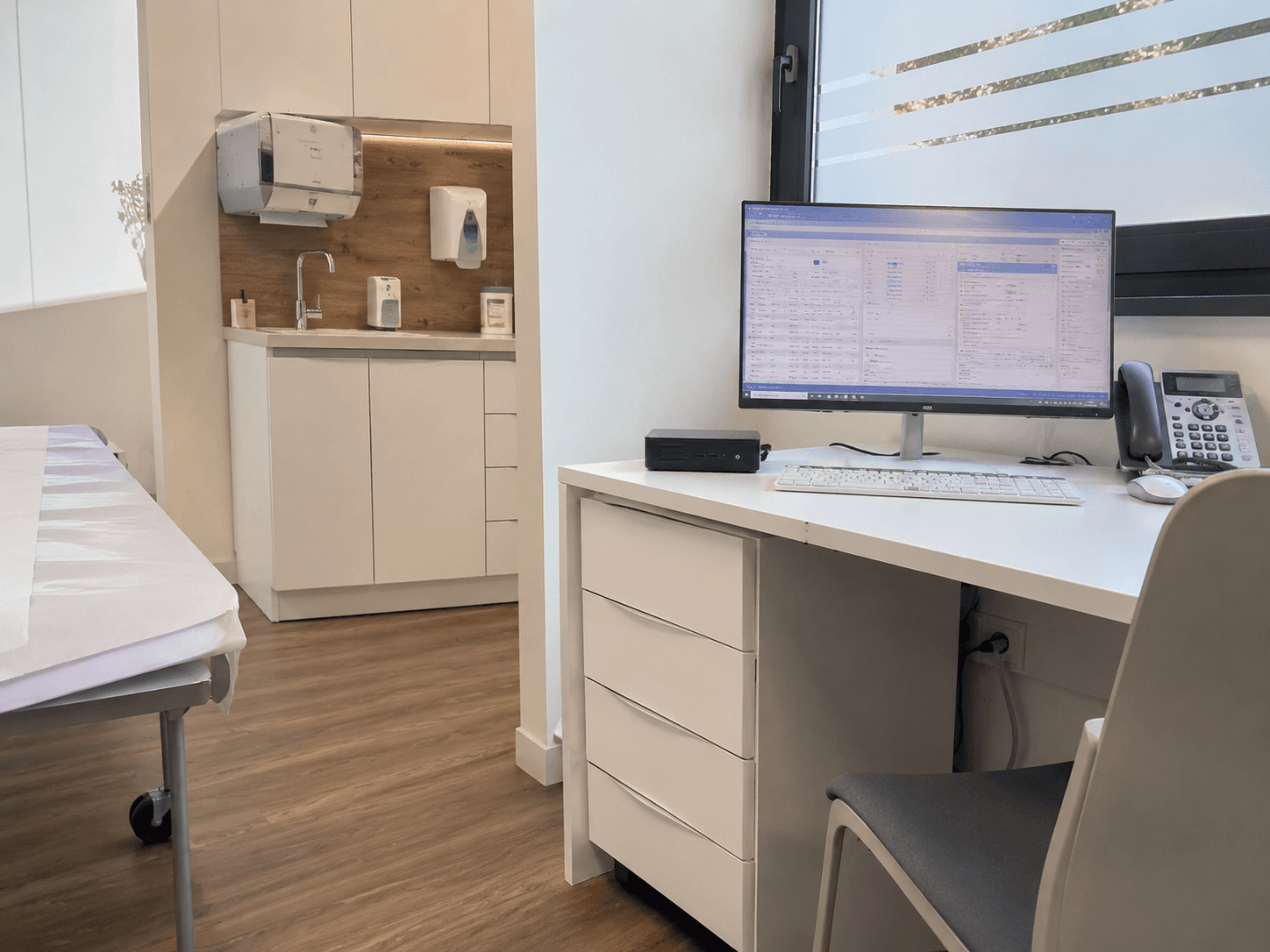
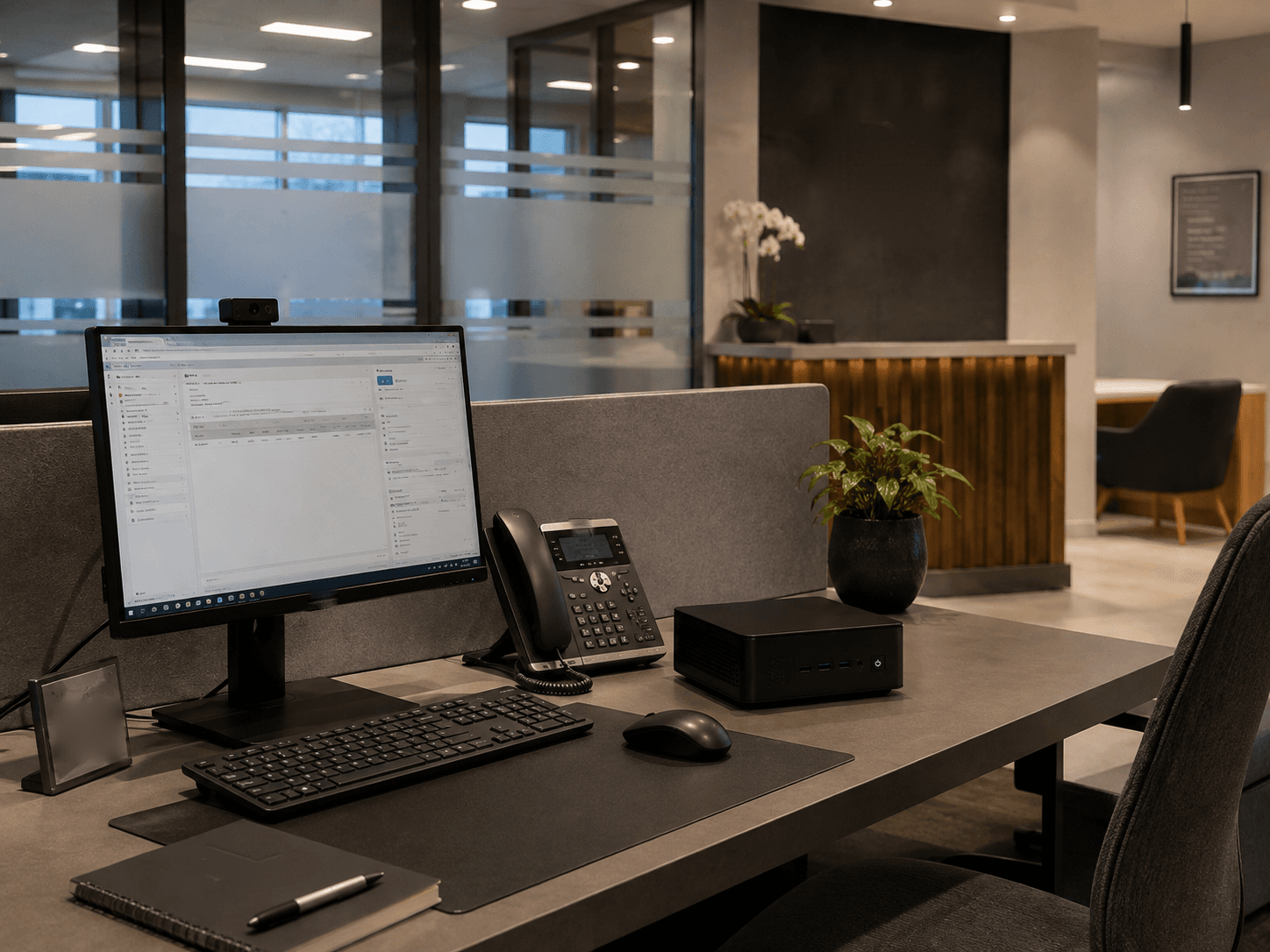
On a compact machine in your own rooms — in one of two classes, depending on the work. Which device it turns out to be is something we decide after looking at your processes, not before.
What is included
What we take care of
Setting up a local system is work — it just is not your work. These six points are always part of the scope.
Choosing the right hardware
We work out from your daily routine which device class is enough — and procure it.
Complete setup of the local AI
Models, applications and user accounts are in place before you sit down in front of it for the first time.
Fitting into the way you already work
The system comes to your folders and programs — not the other way round.
Security architecture & documentation
Access rights, network boundaries, backup and logging are agreed together before go-live – and documented.
Training your staff
An introduction using your own documents, in the language of your profession.
Ongoing security & maintenance
Tested security and software updates, documented version states and one contact person who knows your organisation.
How it works
Five steps to a running system
You do not need an AI team of your own. We take care of setup and integration, and coordinate network, access rights, data sources and security requirements with your internal IT or your existing IT provider where needed.
First conversation
You tell us which work keeps piling up — we tell you frankly whether a local system would change that. Free of charge, no obligation.
Analysis
We look at the documents and programs you work with. Applications and device class follow from that — written down as a concrete offer.
Installation
We connect the fully configured device, link it to your file storage and set up accounts, rights and network boundaries as agreed in the analysis.
Training
Not a lecture about artificial intelligence, but the handful of steps on your real cases that save time from Monday on.
Ongoing support
Tested updates, maintenance, documentation kept up to date and one contact person who knows your organisation. We set up new tasks as they come up.
Who is behind this
Why I build locally

Data protection and artificial intelligence are not opposites. Anyone who wants to be ahead in five years has to bring the technology in today in a way that lets them keep it.
Artificial intelligence arrived long before anyone had settled where the documents actually go in the process. Usually they go to a data centre nobody in the building has ever set foot in. For anyone bound by a duty of confidentiality, that is not a detail to be cleared up later but the decisive question.
The conclusion still cannot be to avoid the technology. Anyone who goes on searching contracts, medical findings and correspondence by hand is not working more safely, only more slowly. And the gap to the practices that do it differently widens every year.
Both are possible at once, provided the AI does its computing where the documents already are. That is exactly why I founded LOCALLUTION: a device in your own rooms instead of an account with somebody else’s service. The technology is there. It has to be chosen, installed and configured properly, and that is my work.
A conversation, not a sales call.
We look at how you work today and work out whether local AI suits your practice. If it does not, we say so — you save weeks of research.
Or simply call: +43 681 10138168